


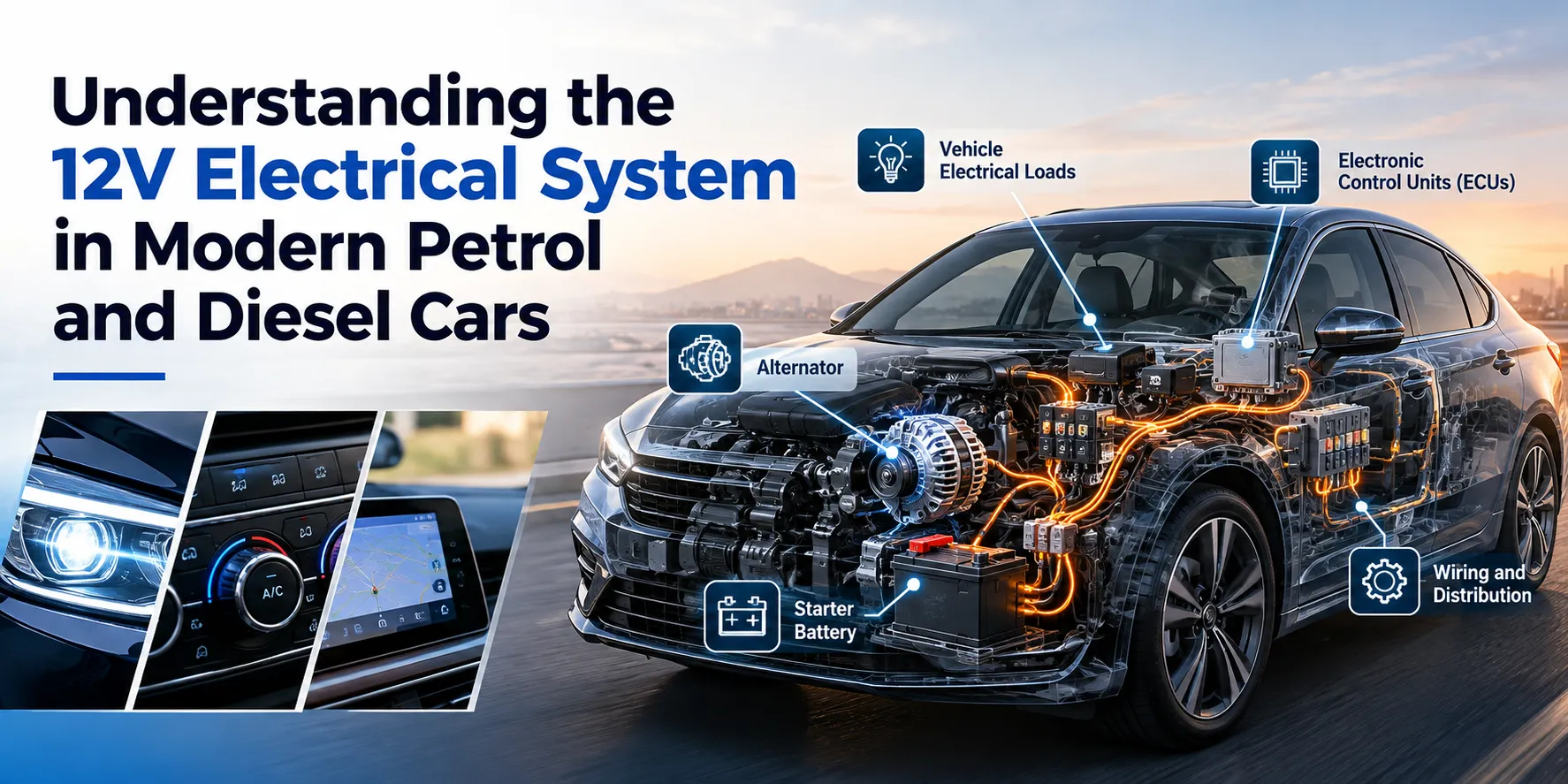
A 12V electrical system in cars is responsible for far more than starting the engine. In conventional petrol and diesel vehicles, the 12V network supplies electrical power to essential systems such as engine control units, lighting, infotainment, sensors, climate-control components, safety systems, and numerous electronic accessories.
Although the battery provides power when the engine is off, the alternator normally supplies electrical energy once the engine is running while also replenishing the starter battery. This makes the 12V electrical system a central part of the vehicle’s energy architecture.
Understanding how this system works helps explain why electrical loads, battery condition, alternator operation, and energy management have become increasingly important in modern vehicles.
What Is a 12V Electrical System in Cars?
The 12V electrical system in cars is the low-voltage electrical network used to distribute power throughout a conventional vehicle.
Its main components typically include:
-
A 12V starter battery
-
An alternator
-
Starter motor
-
Fuses and relays
-
Wiring and electrical distribution components
-
Electronic control units (ECUs)
-
Sensors and actuators
-
Lighting and infotainment systems
-
Heating, ventilation, and air-conditioning components
The starter battery stores electrical energy and provides the high current required to start the engine. Once the engine is operating, the alternator converts mechanical energy from the engine into electrical energy for the vehicle’s electrical loads and battery charging.
The exact architecture varies between vehicle models, but the underlying principle remains straightforward: electrical loads require power, and that power must come from the battery, alternator, or another connected electrical source.
How Does a Car 12V Electrical System Work?
When the engine is switched off, the starter battery is generally the primary electrical source. It can operate systems such as interior lighting, central locking, alarms, infotainment, and other accessories for limited periods.
When the driver starts the engine, the starter motor draws substantial current from the battery. After the engine starts, the alternator begins generating electrical power.
The alternator’s output is regulated according to vehicle requirements. Its electrical production must account for the instantaneous demand from the vehicle’s electrical loads while maintaining an appropriate state of charge in the starter battery.
This relationship between generation and demand is fundamental to the automotive 12V system.
Understanding Alternator Load
An alternator does not generate electrical power without an energy cost. It is mechanically driven by the engine, generally through a belt-driven accessory system. Producing more electrical power creates additional mechanical demand on the engine.
This means the vehicle’s electrical loads are ultimately connected to the engine’s energy system whenever the alternator is responsible for supplying them.
Consider a vehicle operating at night in heavy traffic. Headlights, climate control, windscreen heating, infotainment, engine-management electronics, cooling fans, and other equipment may all require electrical power simultaneously. The alternator must respond to this combined demand while the vehicle continues to operate normally.
The electrical load therefore matters not only from an electrical engineering perspective but also as part of the broader vehicle energy architecture.
Why Are Vehicle Electrical Loads Increasing?
Modern conventional vehicles contain substantially more electronics than older vehicles. Even when the basic engine remains petrol or diesel powered, the supporting electrical architecture can be complex.
Electrical loads can include:
-
Engine and transmission control systems
-
Advanced driver-assistance systems
-
Electric pumps and cooling fans
-
Power steering systems
-
Heated seats and steering wheels
-
Lighting systems
-
Multimedia and connectivity equipment
-
Sensors and cameras
-
Electric windows and seat adjustment
-
Climate-control equipment
Not every load operates continuously, and the actual electrical demand varies according to vehicle configuration and operating conditions.
For engineers and fleet operators, understanding when and where electrical loads occur can therefore be more useful than simply looking at the vehicle’s nominal battery capacity.
Starter Battery vs Auxiliary Battery
The starter battery has a specific role in conventional vehicles: it must provide sufficient electrical energy to start the engine and support the vehicle’s electrical requirements when the alternator is not operating.
An auxiliary battery, by contrast, can be designed to provide additional electrical capacity for selected loads or operating scenarios.
The distinction becomes particularly relevant in applications where electrical equipment needs to operate for extended periods. Commercial vehicles, delivery vehicles, service vehicles, and other fleets can have electrical requirements beyond those of a basic passenger car.
This is one reason auxiliary power systems are an area of interest within automotive retrofit engineering and vehicle energy management.
Practical Considerations for Petrol and Diesel Vehicles
A conventional vehicle’s electrical system needs to balance three basic factors: available electrical generation, electrical demand, and stored energy.
If electrical demand temporarily exceeds alternator output, the battery can help supply the difference. If the battery is repeatedly required to compensate for insufficient available generation, however, maintaining the appropriate state of charge becomes an important consideration.
Fleet operators may face additional challenges because vehicles can spend significant periods idling or operating accessories while stationary. The electrical requirements of a delivery vehicle, for example, may differ considerably from those of a privately operated passenger car.
For retrofit applications, engineers also need to consider compatibility with the existing wiring architecture, battery management, charging characteristics, protection systems, packaging, thermal conditions, and vehicle operating requirements. Any modification to a vehicle’s electrical architecture needs careful engineering rather than simply adding another battery.
Could External Charging Support a Conventional 12V System?
One emerging design approach is to consider whether some electrical demand can be supplied from stored energy that was charged independently of the engine.
Nulldraw is an automotive engineering concept in development based on this principle. The proposed system is designed around a grid-charged auxiliary battery intended to supply a conventional petrol or diesel vehicle’s 12V electrical system, while leaving the engine, alternator, and starter battery in place.
The concept is not an electric vehicle or hybrid system. It is instead focused on the vehicle’s existing low-voltage electrical architecture and how an additional energy source could interact with that architecture.
The design remains in development, so its practical performance, operating characteristics, and suitability for specific vehicle applications should not be assumed without appropriate engineering validation.
Future Considerations for Vehicle Energy Systems
As vehicles continue to incorporate more electronic functions, managing electrical energy becomes an increasingly relevant engineering consideration—even in conventional petrol and diesel vehicles.
The future of automotive electrical engineering is therefore not limited to replacing combustion engines. It also includes examining how electrical energy is generated, stored, distributed, and consumed within existing vehicle platforms.
For fleet applications in particular, understanding electrical loads can help engineers evaluate different operating requirements and identify where auxiliary energy storage or alternative energy-management approaches may be technically appropriate.
The key is to assess the complete system rather than treating the battery, alternator, and electrical loads as isolated components.
Conclusion
The 12V electrical system in cars is a fundamental part of conventional vehicle operation. The starter battery provides stored electrical energy, the alternator generates power while the engine runs, and the vehicle’s electrical architecture distributes that energy to numerous systems and components.
As modern petrol and diesel vehicles become increasingly electronic, understanding electrical demand and alternator load is becoming more important for both passenger vehicles and commercial fleets.
Approaches such as Nulldraw’s proposed auxiliary battery concept illustrate how engineers are exploring different ways of managing electrical energy within existing vehicle architectures. As the design remains in development, its role is best understood as an engineering concept focused on the 12V electrical network rather than as a commercially available vehicle technology.